

Trauma & PTSD Therapy in Naperville, IL
In-Person Trauma and PTSD Therapy in Naperville, IL. Appointments online anywhere in Illinois. Insurance accepted.
When Your Past Still Feels Present
People love to say “what’s past is past” — like you should just get over a difficult thing you’ve gone through. Unfortunately, that’s not how trauma works. If you’ve experienced any sort of trauma, your body and mind learned that you weren’t safe. And to protect yourself in the future, your body will often decide to keep responding that way. You may find yourself constantly on guard, easily overwhelmed, disconnected from others or unsure why certain situations bring up such strong reactions. Or you may find yourself experiencing numbness, self-doubt, shame, difficulty trusting, trouble sleeping or staying busy so you don’t have to feel.
All of that’s normal. If you're experiencing any of that, it's not because something's wrong with you — it's how your body learned to protect itself and survive. But here’s the good news: Just like your body learned to protect itself, it can also learn that you’re safe again. That’s something we can work on together in therapy.
What Trauma Might Look Like For You
The following experiences are common for people who have experienced trauma. However, there is no “right” way to experience it. We’re all different, so you may recognize some of these experiences, all of them, or none of them.
You avoid certain places, people, memories or feelings because you think engaging with them might be too much to handle
You find yourself replaying your traumatic experience, having upsetting dreams or being reminded of your experience by a sound, smell, date, or other reminder.
You might have strong reactions—such as panic, anger, shutting down— to normal circumstances and wonder later why it affected you so much.
You feel a strong need to stay in control. You plan for every possibility, struggle with uncertainty, or become upset when things change unexpectedly.
You blame yourself, minimize what happened, or think you should be over it by now.
You want close relationships, but pull away when someone gets too close. You might also feel responsible for keeping others comfortable.
What Healing From Trauma Can Look Like
You sleep through the night without waking up in a panic
A loud noise, a smell, or unexpected reminder doesn't send you spiraling.
You feel safer in your body, with more daily moments of calm or rest
You can experience hard emotions without feeling completely overwhelmed
You feel more present day-to-day instead of always worrying about what will happen next.


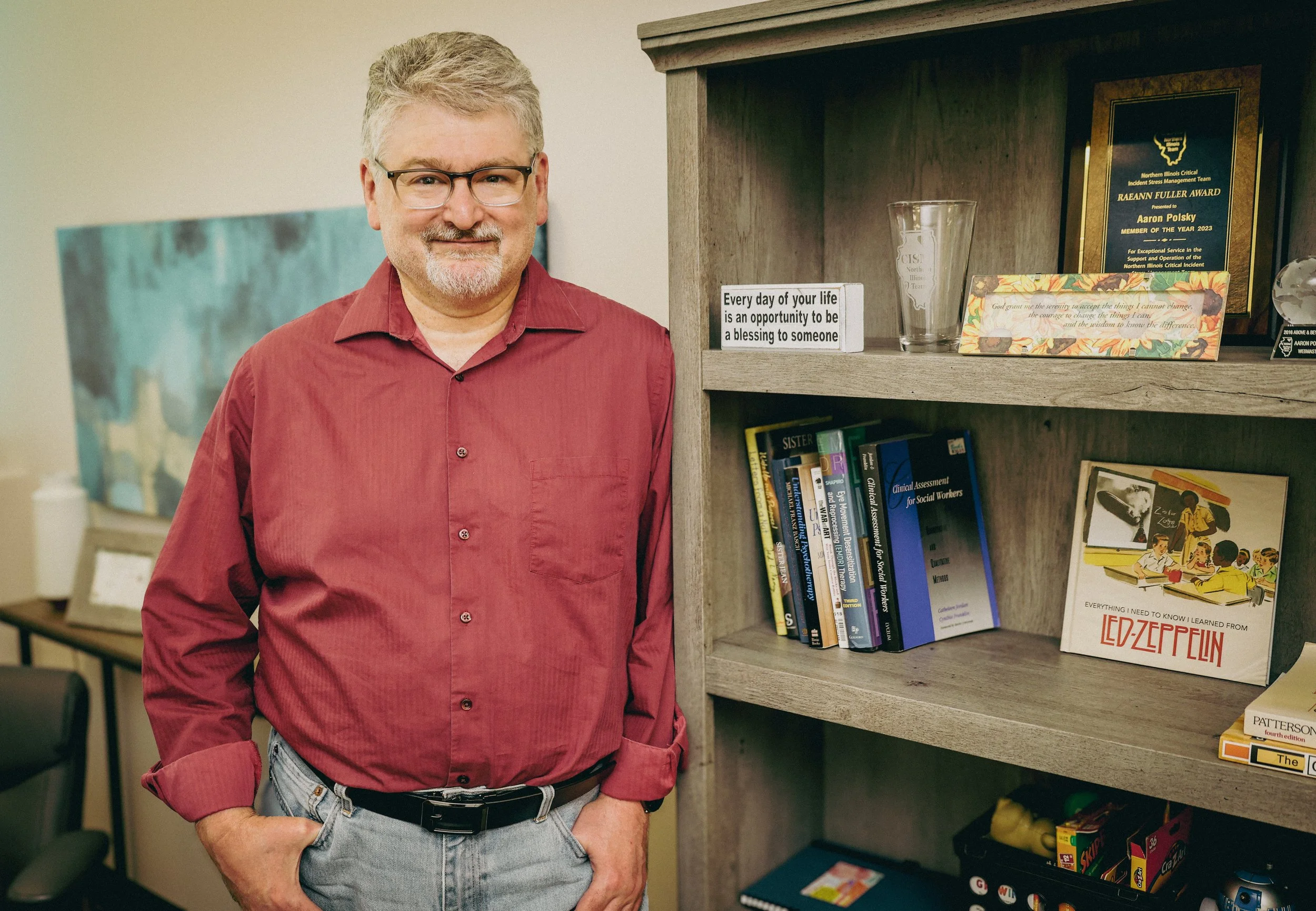
How I Treat Trauma and PTSD
I’ve spent 30 years helping people—from first responders to parents in the ICU—work through their trauma. That experience has taught me that there’s no one-size-fits-all approach to healing. Your story is unique, so we start where it begins.
When we work through your trauma, you’ll be met with empathy and steadiness. It’s only within an environment of safety that you’ll be able to let your guard down and work through it. You’ll also be heard and understood. If I don’t understand something, I’ll say so and keep asking until I do. It not only matters to me, but it’s important for helping you heal.
As we talk about your experiences, we’ll decide what therapy approach will best help you get unstuck. I’m trained in EMDR, a therapy that can be especially effective for trauma and PTSD. EMDR can help you process painful experiences without having to talk through every detail. We might also try other approaches. Some people respond really well to a psychodynamic approach, focused on the unconscious mind and early life. This approach can be especially helpful for complex, developmental trauma. Another approach that is often helpful is Acceptance and Commitment Therapy (ACT). One important part of ACT is learning to accept difficult thoughts and feelings instead of fighting them. Another important part is developing our sense of values and choosing behavior that supports those values.
Ready to Start Healing From Trauma?

What to Expect from Trauma and PTSD Therapy
Your first session is just a conversation. You won’t have to relive everything or figure everything out the first day. I’ll listen, ask questions, and let you set the pace. I’ll never ask you to go deeper or faster than you’re willing.
People often ask how long it will take to “get over it.” Trauma work isn’t usually quick, but it won’t last forever. I’ve worked with people long enough to know that healing is possible when you commit to the work. Even just being heard can help you start to feel better within the first few sessions

I Accept Insurance for Therapy
I’m in-network with Aetna PPO, Blue Cross PPO, and Cigna PPO. If you have a different insurance plan, I can provide a superbill for out-of-network reimbursement. Self-pay is available too.
Aetna PPO
Blue Cross PPO
Cigna PPO

Visiting the Naperville Office
In-person sessions take place at my Naperville office.
-
If there’s something that happened to you that you think is still affecting your daily life or relationship, reach out. We can discuss whether trauma therapy would be beneficial for you in a free consultation call.
-
EMDR (Eye Movement Desensitization and Reprocessing) is a type of therapy that can be extremely effective for trauma therapy. It uses guided eye movements or other bilateral stimulation while you focus on a traumatic memory. It helps your brain reprocess that memory so it stops feeling as overwhelming or stuck. If it would be helpful to your situation, I’ll let you know. But you never have to do anything you’re not comfortable with.
-
Nope. You set the pace. Some people share a lot early on, while others take longer. Both are fine. What’s right for you is always most important.
-
Yes! I work with people throughout Chicago’s western suburbs, including Aurora, Wheaton, Plainfield, plus anyone in Illinois via virtual sessions.
-
Yes. And I do take insurance. I’m in-network with Aetna PPO, Blue Cross PPO, and Cigna PPO. I also accept private pay.
Frequently Asked Questions About Trauma & PTSD Therapy
Ready to Get Started?
Take the first step towards healing.